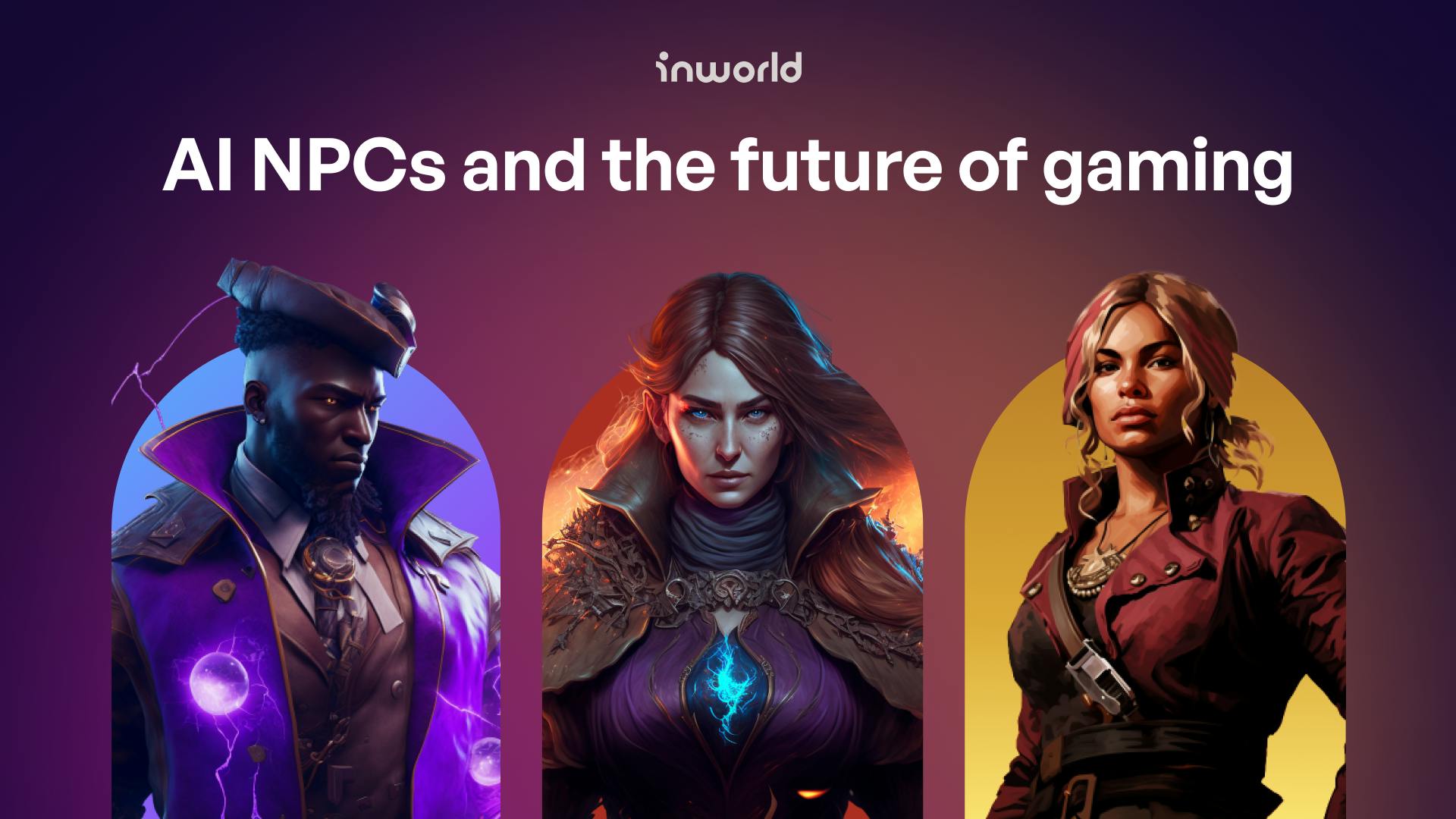
Deep Learning: Enhancing NPC AI and PCG in Video Games
The landscape of video games is undergoing a profound transformation, driven by advancements in artificial intelligence, particularly deep learning. Gone are the days when non-player characters (NPCs) were solely reliant on rigid scripts and predictable patterns, or when every inch of a game world had to be painstakingly crafted by hand. Today,
machine learning in video games is ushering in an era of unprecedented realism, dynamic gameplay, and boundless creativity, with deep learning at its forefront. This powerful subset of machine learning leverages intricate artificial neural networks to learn from data, creating adaptive systems that breathe new life into virtual worlds, from intelligent foes to infinitely explorable environments. Unlike traditional AI methods, which often rely on predefined rules or search trees, deep learning empowers games with intelligence that can evolve and surprise.
The Dawn of Intelligent Companions: Deep Learning in NPC AI
For decades, the perceived intelligence of NPCs has been a key factor in a game's immersion and challenge. Early game AI often relied on finite state machines or rule-based expert systems, leading to predictable behaviors that players could easily exploit. Deep learning is changing this paradigm entirely.
Moving Beyond Scripted Responses
Deep learning allows NPCs to transcend their scripted limitations, enabling them to learn, adapt, and make decisions in complex, dynamic environments. Through techniques like deep reinforcement learning (DRL), virtual agents can be trained to navigate intricate 3D spaces, respond strategically to player actions, and even exhibit human-like combat behaviors. Rather than following a set path, a DRL-trained NPC learns optimal strategies by trial and error, rewarding successful actions and penalizing failures. This is evident in games ranging from classic first-person shooters like ViZDoom, where AI agents learn to outmaneuver and engage in sophisticated combat using convolutional neural networks (CNNs), to more complex strategy titles. The result is an NPC that feels less like an algorithm and more like a genuinely intelligent opponent or companion.
Empathy, Strategy, and Dynamic Interaction
Beyond mere combat, deep learning enables NPCs to develop more nuanced behaviors. Imagine an NPC that not only reacts to your presence but learns your playstyle, anticipates your moves, and adjusts its own strategy accordingly. In complex strategy games such as StarCraft, Chess, or Go, deep learning agents have famously reached and even surpassed professional human players, demonstrating an ability to grasp intricate strategies and execute them with unparalleled precision. This capacity to learn and adapt can lead to:
- Increased Replayability: Every playthrough offers a unique challenge as NPCs evolve.
- Deeper Immersion: Characters feel more authentic and responsive to player actions.
- Dynamic Storytelling: NPCs can respond contextually, influencing narrative branches based on learned interactions.
Practical Tip for Developers: Leveraging DRL to pre-train a diverse range of NPC "personalities" can provide varied gameplay experiences without the need for extensive manual scripting for each character type.
Unleashing Infinite Worlds: Deep Learning in Procedural Content Generation (PCG)
Creating expansive, detailed game worlds is an incredibly resource-intensive process. Procedural Content Generation (PCG) has long been a solution, generating content algorithmically. However, traditional PCG often struggled with generating truly cohesive and aesthetically pleasing environments without significant manual oversight. Deep learning transforms PCG by infusing it with an understanding of patterns, styles, and consistency.
From Manual Crafting to Algorithmic Creativity
Deep learning-based content generation can analyze existing game assets, real-world data, or artistic styles to generate new, unique, and coherent content. This isn't just about random placement; it's about intelligent generation that respects design principles and ensures a consistent aesthetic. From crafting endless dungeons to generating realistic landscapes, dynamic quests, and even new character designs, deep learning acts as an algorithmic artist and designer, significantly reducing development time and opening the door to truly infinite game worlds. This also applies to generating textures, items, and even entire level layouts that feel hand-crafted.
Convolutional Neural Networks (CNNs) and World Building
One of the most powerful tools in deep learning for PCG is the Convolutional Neural Network (CNN). CNNs are specialized artificial neural networks incredibly adept at analyzing image data. They learn patterns in a hierarchical fashion – detecting simple features like edges and corners in early layers, and progressively identifying more complex structures like objects, buildings, or entire environmental compositions in later layers. Crucially, CNNs learn "translation-invariant" patterns, meaning they recognize a pattern regardless of its position in an image.
This makes CNNs invaluable for tasks such as:
- Generating Realistic Textures: Creating seamless, high-resolution textures for terrain, materials, and objects.
- Environmental Generation: Designing entire landscapes, cities, or alien worlds with cohesive architectural styles and ecological systems.
- Level Design: Learning from successful level layouts to generate new, challenging, and engaging playable spaces.
The ability of CNNs to understand and generate visual data in a structured, intelligent way is a game-changer for PCG, promising worlds that are not only vast but also richly detailed and believable.
The Neural Network Backbone: Powering Deep Learning in Games
At the core of these transformative applications are artificial neural networks (ANNs). These interconnected groups of nodes, inspired by the human brain's neural structure, form the fundamental building blocks of deep learning. Each "neuron" processes inputs and passes an output to others, learning to identify complex patterns from vast datasets. To truly understand the mechanics behind this revolution, delving into
Understanding Neural Networks in Modern Video Game AI is essential.
Beyond CNNs: RNNs for Dynamic Experiences
While CNNs excel with spatial data like images, Recurrent Neural Networks (RNNs) are designed to process sequential data, making them perfect for tasks that depend on temporal order. An RNN processes data one part at a time, using its memory of previous parts in the sequence to influence its current output. This capability makes RNNs highly effective for:
- NPC Dialogue Generation: Creating contextually appropriate and natural-sounding dialogue based on conversation history.
- Adaptive Music: Generating dynamic soundtracks that evolve with the player's actions and the game's emotional state.
- Player Input Analysis: Understanding complex sequences of player actions to predict behavior or adapt game difficulty.
Imagine an NPC that learns your verbal tics or a game score that subtly shifts mood based on your recent combat performance – all powered by RNNs.
The Training Imperative: Data and Hardware
Deep learning models, by their very nature, require massive amounts of data to learn effectively. This data can range from gameplay footage and player actions to existing art assets and environmental scans. Furthermore, the training and execution of these complex, multi-layered neural networks demand significant computational power, often requiring high-end GPUs and cloud computing resources. While the gaming industry typically keeps its proprietary machine learning implementations under wraps, research projects continually push the boundaries, providing public insights into the incredible potential of
machine learning in video games.
The Future Landscape: Challenges and Opportunities for Machine Learning in Video Games
The integration of deep learning presents immense opportunities, but also unique challenges that developers must navigate.
Balancing Innovation with Performance
One of the primary hurdles is the computational cost of running sophisticated deep learning models in real-time within a game. Developers must constantly optimize these models for efficiency, ensuring that the enhanced AI and PCG don't come at the expense of frame rates or system stability. This involves careful model design, efficient inference techniques, and leveraging hardware acceleration.
Ethical Considerations and Player Experience
As AI becomes more advanced, questions arise about fairness, transparency, and the potential for an "uncanny valley" effect where AI is almost human-like but not quite, leading to an unsettling experience. The goal of deep learning in games is to enhance, not diminish, the player's enjoyment and challenge. Striking the right balance between AI sophistication and maintaining an engaging, fun, and fair experience is crucial. For a broader view on the current impact, explore
How Machine Learning is Revolutionizing Video Games Today.
Conclusion
Deep learning is rapidly redefining what's possible in video games. By empowering NPCs with unprecedented intelligence and enabling the generation of vast, dynamic, and intricate content, it's driving a new wave of innovation. From highly adaptive AI opponents and companions to endlessly explorable, procedurally generated worlds, deep learning enhances immersion, boosts replayability, and streamlines development. As computational power continues to grow and research advances, the applications of
machine learning in video games will only expand, promising a future where virtual experiences are more dynamic, intelligent, and captivating than ever before.